
AI is already in your business.
Are you in control of it?
Understand the tools your business uses, set clear rules for your people and take practical steps to manage AI responsibly.
THE THINKING BEHIND AI SAFE
01 / DISCOVER
Find out what is in use
Start with the tools, accounts, people and information already involved.
Before you write a policy, know what you're working with.
02 / DECIDE
Make clear choices
Set practical boundaries, approvals and human responsibilities.
03 / DOCUMENT
Put it into practice
Use the appropriate notices, registers, policies and records as evidence of what you have done.
TWO WAYS TO GET STARTED
START HERE · ONE-OFF PURCHASE
AI Starter Pack — £29
The essentials to put in place this week.
AI rules to give your team
AI tool checklist
Ready-to-use privacy wording
Basic complaint and incident processes
Record-keeping basics and a self-check
No update subscription. £29 upgrade credit within 60 days, subject to the offer terms and checkout being enabled.
Choose the level of support your business needs.
FOR BUSINESSES NEEDING A FULLER APPROACH
AI Business Pack — £149
Build a documented approach to AI use across your business.
Start Here: a route through the pack
Core Handbook: shared rules
16 editable templates: notices, policies, registers and assessments
Available activity and profession guides, plus Provider Reference
12 months of corrections, legal updates and Provider Reference updates
Optional update renewal after 12 months: £49/year. No automatic charge. Personal support is separately scoped..
FOCUSED ISSUES
One specific challenge?
Two emerging workplace risks. Practical policies to help your business stay in control.
STANDALONE POLICY
Bring Your Own AI (BYOAI) Policy
Your employees may already be using AI tools you don't know about.
From personal ChatGPT accounts and browser extensions to AI note-takers and assistants connected to work systems, employees can unintentionally expose business, customer and confidential information.
This ready-to-use workplace policy helps employers set clear rules for personal AI use, identify approved tools, protect sensitive information and respond when something goes wrong.
Includes an adaptable policy, employee acknowledgements, approved tool registers, assessment forms, incident procedures and practical workplace scenarios.
Take control of AI use across your business without preventing your people from benefiting from it.
STANDALONE POLICY
AI Wearable Devices at Work Policy
Smart glasses, AI earbuds and recording devices are already entering the workplace. Are your rules keeping up?
From smart glasses capable of capturing images and video to AI-powered earbuds, translation devices and wearable recorders, new technology is changing how information can be collected and shared at work.
This ready-to-use workplace policy helps employers protect staff, customers and confidential information while setting clear boundaries around recording, privacy, consent and authorised use.
Includes an adaptable policy, employee acknowledgements, visitor notices, contractor clauses, incident procedures, impact assessment templates and guidance on accessibility and reasonable adjustments.
Protect workplace privacy while supporting responsible, inclusive use of emerging technology.
AI POLICIES UK · THE HANDS-UP EXERCISE
How many hands would still be raised?
AI is becoming part of how organisations operate. But can you confidently explain what is already happening inside yours?
Imagine five hands raised. Answer each question. Every "Not yet" lowers a hand.
5 hands still raised
FIVE QUESTIONS. ONE CLEARER PICTURE.
An awareness exercise, not a formal compliance assessment or legal certification.
RESEARCH AND PERSPECTIVES
The thinking behind the tools.
Clear products, supported by the wider work of AI Policies.
PUBLISHED WEEKLY
THE AI LAW REPORT
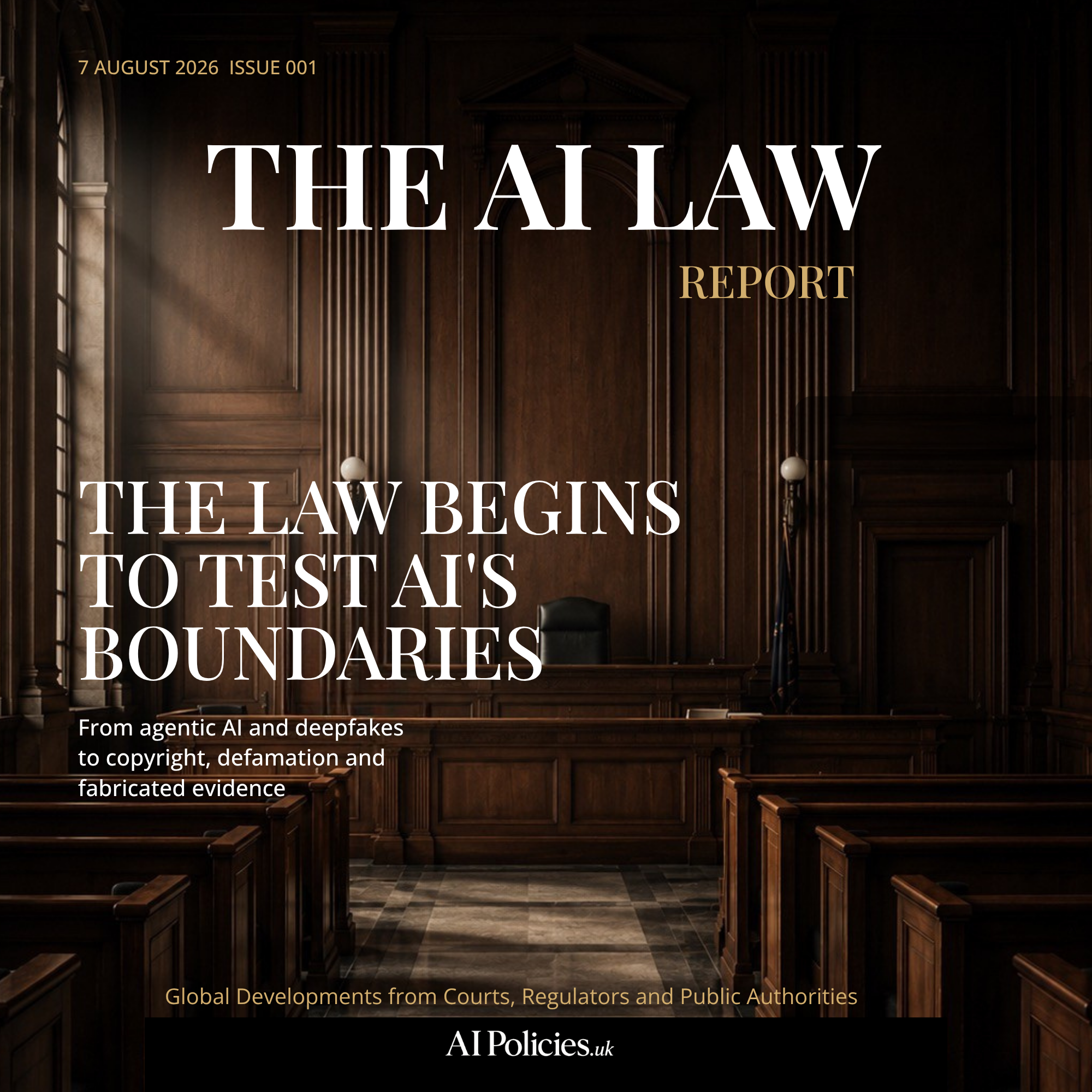
A verified record of the court decisions, regulatory action and legal developments shaping the use of AI.
PUBLISHED WEEKLY
THE TUESDAY PAPER

Tuesday Papers by Louize ClarK, Original thinking exploring how artificial intelligence is changing organisational operating conditions, decision-making and operational dependency.
QUESTIONS BEFORE YOU BUY
Know exactly what you’re getting.
-
It covers essentials for everyday AI use with ordinary personal information. If you use AI with health or other sensitive information, staff or contractor workflows, recording, action-taking assistants, work on clients’ data or decisions about people, the Starter Pack identifies where more assessment is needed.
-
Four parts: Start Here, Core Handbook, Editable Templates, and Guidance and Provider Reference. You receive the documents available on the date you buy, plus the specified corrections, legal updates and Provider Reference updates for 12 months. New products and personal support are not automatically included.
-
No. The Start Here guide is designed to direct you to a core route and then to additional templates only where relevant.
-
You can optionally renew specified Business Pack updates for £49 a year. You keep the documents already downloaded whether you renew or not. There is no automatic renewal charge.
-
The licence permits adapting documents for the operations of one legal entity, including appropriate completed client clauses and agreements. It does not permit redistributing blank templates or creating policies for other businesses using the pack. -
No. The packs provide professional guidance and resources to help you build and evidence your approach. Specialist advice may be appropriate to your circumstances.

Louize Clark
Founder of AI Policies UK and creator of Infrastructure Intelligence™
For more than twenty years, Louize Clark’s work has centred on the point where new technology becomes part of everyday organisational life.
Her background spans Law, International HR Management, Digital Transformation, Behavioural Science and Cross-Sector Innovation. She has contributed to early digital projects, worked across complex organisational environments and spent thousands of hours studying how people respond to change.
Get in touch today